Unknown Contact Search Database and Caller Analysis: 685105011, 665715255, 933930429, 911087021, 605713742, 683785843, 955003268, 983216922, 630300080 & 936760510

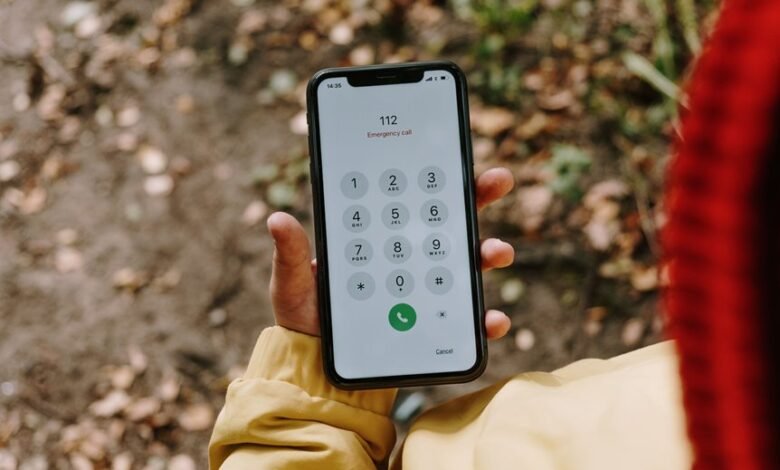
Unknown contact search and caller analysis leverage public records and privacy-preserving techniques to assess risk for a set of numbers such as 685105011, 665715255, 933930429, 911087021, 605713742, 683785843, 955003268, 983216922, 630300080, and 936760510. The approach emphasizes data minimization, transparent scoring, and automated triage to distinguish benign from suspicious intents. It presents a disciplined framework, but questions remain about implementation details and safeguards that ensure accountability and user control.
What Unknown Contact Search Is and Why It Matters
Unknown Contact Search refers to methods for identifying the source and details of unknown callers or messages, using publicly available records, provider data, and privacy-respecting analyses. It yields unknown contact insights through data enrichment, enabling verification steps and minimizing caller risk. The approach emphasizes privacy, standards, and transparency, supporting freedom-seeking users while maintaining accountability and reliable identification without overreach.
How Caller Analysis Decodes Intent and Risk
Caller analysis interprets inbound signals to distinguish benign from risky intent and to estimate potential harm. It evaluates caller intent through observable cues, cross-referencing risk indicators with context while upholding data privacy constraints. Standards-driven processes align with security best practices, minimizing data exposure. The approach respects user autonomy and freedom, prioritizing transparent outcomes over intrusive surveillance.


Practical Steps to Build a Safe Unknown-Contact Workflow
A practical unknown-contact workflow can be built by defining clear entry criteria, data minimization rules, and automated triage steps that respect user privacy and regulatory standards.
The approach centers on unknown contact handling, robust data safety, and transparent caller analysis.
It enforces risk assessment protocols, documentation, and auditability to sustain freedom while upholding accountability and privacy commitments.
Interpreting the Sample Numbers: 685105011, 665715255, 933930429, 911087021, 605713742, 683785843, 955003268, 983216922, 630300080 & 936760510
These sample numbers serve as a concrete set for interpreting unknown-contact data, illustrating how numeric identifiers can be parsed, validated, and mapped to potential signals without exposing sensitive details.
The enumeration supports reproducible analysis, aiding privacy-preserving classification, and enabling risk-aware screening.
In practice, unknown contacts are assessed for caller risk, aligning with standards and user autonomy.
Frequently Asked Questions
Do These Numbers Reveal Caller Location Details?
Caller location details are not reliably revealed publicly; privacy standards target minimization. The question highlights privacy risks and social media linkage risks, urging cautious handling of data while respecting freedom and individual rights in information sharing.
Can Numbers Be Linked to Social Media Profiles?
LinkedIn mining, profile matching, sentiment risk—linked to numbers, or not; LinkedIn implications: privacy-preserving standards apply, but social profiles may be revealed through persistent identifiers; however, strong consent, transparency, and minimization are essential.
Are There Legal Risks in Unknown-Contact Screening?
Unknown-contact screening entails legal risks if misused; it requires rigorous privacy implications awareness and data minimization. The process should balance inquiry efficiency with rights protection, ensuring transparency, lawful bases, and proportionality for individuals exercising freedom and privacy.
How Reliable Are Sentiment-Based Risk Assessments?
Sentiment-based risk assessments are not wholly reliable; they rely on context and data quality. They should rely on reliable indicators and bias mitigation, with privacy safeguards and standards-driven methods guiding interpretation for audiences prioritizing freedom.
What Happens if a False Positive Flags a Legitimate Contact?
False positives misclassify legitimate contacts, triggering unnecessary flags, verification delays, and trust erosion; therefore, robust contact verification, transparent data ethics, and minimized privacy risks are essential, ensuring accountability, proportional scrutiny, and user autonomy within standards-driven processes.
Conclusion
In a twist of coincidence, the unknown-contact workflow quietly aligns with privacy by design, revealing patterns without exposing identities. The numbers—mere data points—become indicators only when cross-validated with context, risk signals, and consent. This detached system echoes standards-driven practices: minimization, auditability, and transparency. When safeguards trigger, triage mirrors prudent gatekeeping, not intrusion. In the end, the coincidence lies in responsible use, turning randomness into accountable, privacy-preserving risk insight.