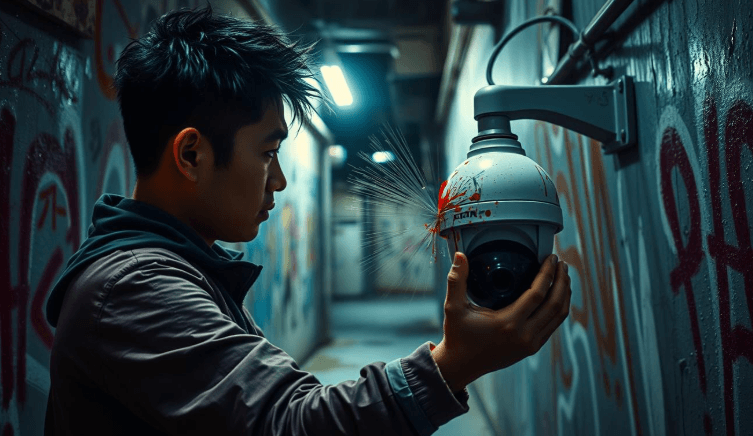
Graffiti and vandalism are more than an eyesore for property owners. They damage surfaces, drain budgets and leave staff and customers feeling that a place is neglected or unsafe. Understanding how security cameras discourage this behaviour helps owners decide whether a system is worth the investment for their premises.
The real cost of graffiti and vandalism
The direct costs are easy to see: paint, cleaning products, replacement glass and the labour to repair damage. The indirect costs are harder to measure but often larger, including lost trade, lower rental appeal and the time managers spend arranging repairs and dealing with insurers or councils.
Repeat damage also sends a message. A wall that is tagged again within days of being cleaned tells offenders that nobody is watching. Premises that look unmonitored tend to attract more of the same, so a single incident can quickly become a recurring problem that wears down everyone involved.


How cameras change behaviour
Cameras work first as a deterrent. Most opportunistic offenders look for places where they can act quickly without being identified. Visible cameras, clear signage and good lighting raise the chance of being recognised, and that perceived risk is often enough to send them looking for an easier target.
Cameras also provide evidence when something does happen. Clear footage showing the time, direction of approach and distinguishing features gives police something concrete to work with, and it supports insurance claims. Poor-quality images, by contrast, often prove too grainy or dark to help anyone.
A qualified CCTV installer Perth can assess your premises, recommend suitable camera types and position them so that blind spots are covered. Professional design matters because the wrong lens or mounting height can leave key walls, laneways or loading areas outside the frame when you need them most.
Where to place cameras for best coverage
Focus on the places offenders favour: blank side walls, rear laneways, car parks, fences along public paths and entrances hidden from the street. Walk the boundary at dusk and ask where someone could work unseen for several minutes. Those spots deserve attention before the main entrance does.
Mount cameras high enough to resist tampering but low enough to capture faces and clothing. Angle them to avoid direct glare from the sun or street lights, which can wash out footage. Consider vandal-resistant housings for units that sit in exposed or easily reached locations.
Lighting and visibility
Lighting and cameras reinforce each other. A well-lit wall lets cameras record clear colour images, while darkness forces cameras into infrared mode with less detail. Motion-activated lights also startle intruders and draw attention from passers-by, neighbours and anyone driving past late at night.
Keep sightlines open as well. Overgrown shrubs, stacked pallets and parked trailers create hiding places that block both cameras and the natural surveillance of people walking by. A tidy, open frontage tells offenders that someone is paying attention and would notice unusual behaviour quickly.
Evidence, reporting and recovery
When damage occurs, photograph it before cleaning and save the relevant footage straight away. Many systems overwrite recordings after a set number of days, so exporting clips promptly protects the evidence. Note the date, time and location, then report the incident to police and your insurer.
Report every incident, even minor ones. Repeated reports help police and councils recognise patterns, such as the same tag appearing across several streets. Consistent documentation also strengthens any later claim and shows that you have taken reasonable steps to protect the property and respond quickly.
Prompt cleaning is part of recovery. Removing graffiti quickly takes away the reward for the offender, because they no longer see their work on display. Use methods suited to the surface, since harsh chemicals or pressure washing can damage brick, timber or painted finishes permanently.
Understanding why people tag walls
Not everyone who picks up a spray can intends harm. Many young people are drawn to lettering and street art as a creative outlet. Some of them simply have no legal place to practise, so they drift towards walls that belong to somebody else without really thinking about the consequences.
Giving that creativity a harmless outlet can help, and a free online graffiti designer lets people experiment with colours, lettering and layouts on virtual walls. It will not stop determined offenders, but it shows that the interest in design can be explored without touching real property.
Councils and community groups also run legal wall programs and youth art projects, which offer a sanctioned place to paint. Owners who live near a regular trouble spot may find that supporting such initiatives, alongside sound security, reduces tagging more effectively than enforcement alone.
Working with neighbours and the community
Talk to the businesses and residents around you. Neighbours often notice patterns that you miss, such as the days and times when damage tends to occur. Sharing that information, and agreeing who will call police, makes it easier to act quickly when something looks suspicious.
Some areas run neighbourhood watch groups or business networks that share alerts and advice. Joining one costs little and builds goodwill. Offenders are less comfortable in places where people know each other, keep an eye out and are ready to report unusual activity without delay.
Quick cleanup and prevention
Plan how you will respond before an incident happens. Keep a record of the paint colours used on your walls so touch-ups match, and store basic cleaning supplies where staff can reach them. A response measured in hours rather than weeks sends a much stronger message.
Consider protective coatings on surfaces that are targeted often. Anti-graffiti sealers make paint easier to remove without harming the underlying finish. Murals, climbing plants and textured cladding also reduce the appeal of a blank wall, because offenders prefer clean, smooth surfaces they can mark easily.
Putting a plan together
A good plan combines several layers: visible cameras, sound lighting, tidy surrounds, quick cleaning and strong relationships with the people nearby. No single measure solves the problem alone, but together they raise the effort and the risk for anyone thinking of damaging your property.
Start by listing your most vulnerable walls and entry points, then arrange a professional assessment. Ask about image quality at night, storage time, remote access and maintenance. A clear brief helps installers propose a system that fits your premises and your budget rather than a generic package.
Review the setup regularly. Check that cameras are clean, correctly aimed and still recording, and adjust the plan when the surroundings change. With steady attention, most properties can cut the frequency of graffiti and vandalism and respond far more confidently when it does occur.