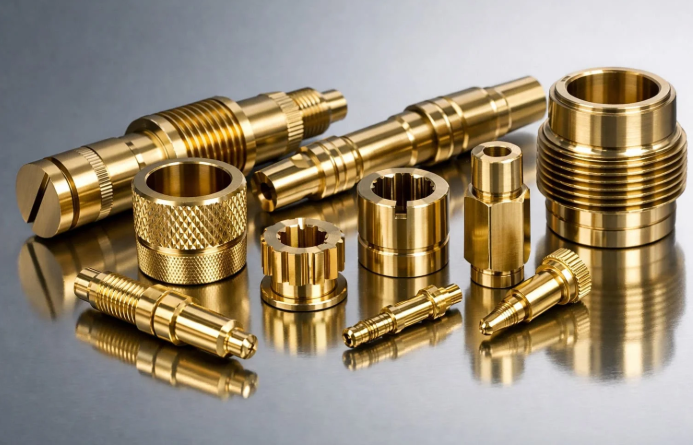
Manufacturers across various industries need metal components that offer dimensional accuracy, durability, and dependable performance. Precision brass parts are widely used in electrical systems, automotive assemblies, consumer electronics, and industrial equipment because brass combines useful mechanical properties with good corrosion resistance and machinability. With modern metal stamping technology, manufacturers can produce customized brass components that meet specific design requirements and support consistent production quality.
What Are Precision Brass Parts?
Precision brass parts are components manufactured from brass alloys to achieve specific shapes, dimensions, and performance characteristics. Brass is primarily composed of copper and zinc, with its properties varying according to the alloy composition and manufacturing method.
These components can be produced through stamping, machining, forming, and other metalworking processes. For thin metal components and high-volume production, precision stamping is particularly useful. Specialized dies and stamping presses shape brass sheets into terminals, connectors, contact components, brackets, and other customized parts.

The manufacturing process depends on the component’s design, material thickness, tolerances, and intended application. Careful planning helps ensure that finished parts meet technical specifications.
Key Advantages of Brass Components
Brass offers several properties that make it suitable for precision manufacturing.
Good electrical conductivity: Brass can be used in electrical terminals, connectors, and contact components where reliable electrical performance is required.
Excellent machinability: Many brass grades are relatively easy to machine and form, supporting the production of components with detailed features.
Corrosion resistance: Brass offers useful resistance to corrosion in many environments, although performance depends on the alloy and operating conditions.
Design flexibility: Stamping and other manufacturing processes can create customized shapes, openings, bends, and contact features.
Consistent production: Well-designed tooling and appropriate quality controls help manufacturers produce repeatable components for large orders.
Selecting the right brass grade is important because strength, conductivity, formability, and corrosion resistance vary between materials.
Applications Across Different Industries
Precision brass components support a wide range of industrial and commercial applications.
Electrical and Electronic Equipment
Brass parts are used in electrical terminals, connectors, contact components, and other conductive assemblies. Their combination of conductivity, formability, and machinability makes them suitable for designs requiring accurate dimensions and dependable connections.
Automotive Systems
Automotive applications may include wiring terminals, connector components, and specialized electrical hardware. These parts must be manufactured according to the relevant dimensional and performance requirements to fit correctly within larger assemblies.
Consumer Electronics
Compact electronic products often require small metal components with carefully controlled shapes. Precision brass stamping can support the production of connectors, contact parts, and other components used in electronic devices.
Industrial Machinery
Brass components may also be incorporated into equipment, instruments, fittings, and specialized mechanical assemblies. Material selection depends on factors such as mechanical loads, environmental exposure, and the required service life.
How Precision Brass Parts Are Manufactured
The process generally begins with reviewing technical drawings, material requirements, and production quantities. Engineers then determine the appropriate manufacturing method and develop the required tooling.
During stamping, a press and die form brass sheet into the desired component geometry. Depending on the design, secondary operations such as deburring, cleaning, machining, or surface finishing may follow.
Quality inspection is essential throughout production. Manufacturers may check dimensions, surface condition, material specifications, and functional characteristics to verify that components meet customer requirements. Prototype samples can help identify design or tooling issues before larger production runs begin.
Choosing a Reliable Brass Components Supplier
When selecting a supplier, businesses should evaluate its material knowledge, tooling capabilities, production capacity, and quality-control procedures. Experience with custom stamping and different copper alloys can also help manufacturers identify practical solutions for specific applications.
Providing accurate drawings, tolerances, material specifications, and estimated order quantities helps the supplier assess the project. Buyers should also discuss sample approval, finishing requirements, production schedules, and inspection standards before confirming an order.
See also: What to Look for When Choosing an AI SEO Agency for Your Business
Explore Precision Brass Parts at HSK Precision
HSK Precision manufactures customized copper and copper alloy stamping components, including brass parts, terminals, connectors, and spring components for electrical, automotive, electronic, and industrial applications.
Businesses looking for precision brass parts can explore HSK Precision’s copper product category to learn more about its material options and component offerings.
By combining appropriate alloy selection, precision tooling, and effective quality control, manufacturers can produce reliable brass components that meet demanding specifications and support long-term product performance.